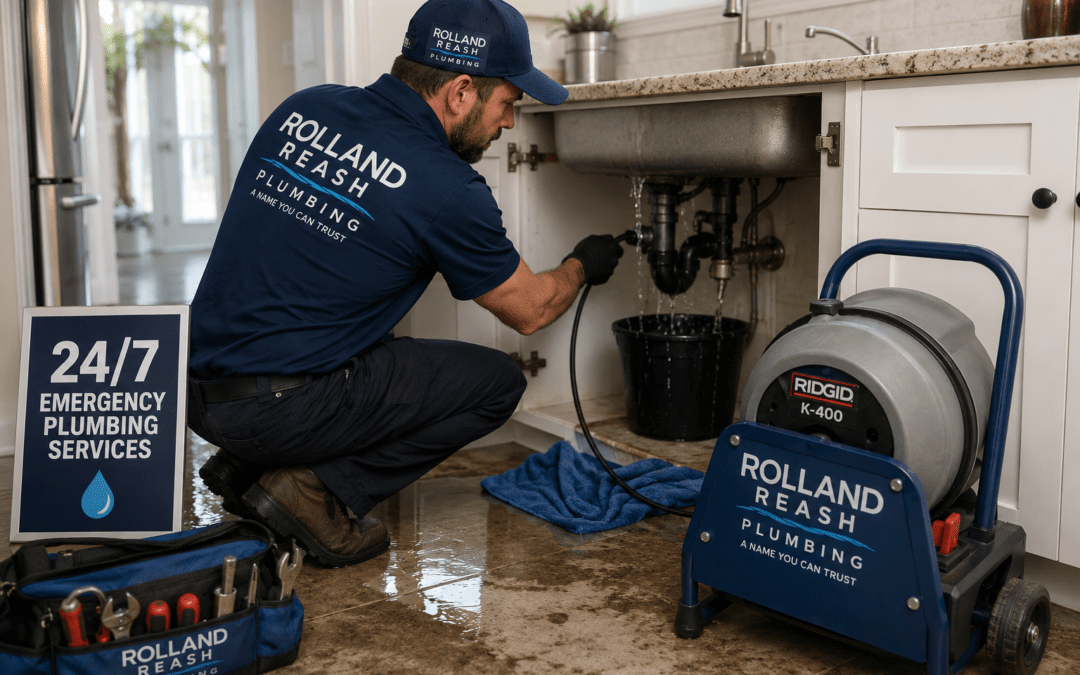
Plumbing problems often develop quietly. A loose connection, slow toilet leak, damaged appliance hose, or unusual pressure change may go unnoticed until water reaches a cabinet, wall, ceiling, or floor. Regular plumbing maintenance helps Jacksonville homeowners find these warning signs sooner, reduce water waste, and make informed repair decisions before minor concerns become disruptive problems.
Jacksonville homes also face local conditions that make routine checks especially valuable. Heat, humidity, heavy rain, storms, outdoor water use, and long cooling seasons can place different demands on household plumbing. Although maintenance cannot prevent every failure, it can help you notice changes in performance and respond before the damage spreads.
Rolland Reash Plumbing has served property owners since 1999. Our licensed and insured team helps homeowners evaluate plumbing concerns, understand available options, and determine when professional work is necessary. Homeowners seeking professional plumbing guidance from Plumbers in Jacksonville, FL can turn to our team for residential plumbing inspections, maintenance support, repairs, and installation services.
12 Essential Plumbing Maintenance Tips
Preventive care works best when it becomes part of a normal household routine. The following steps cover visible plumbing, water usage, fixtures, appliances, exterior components, and professional evaluation.
1. Perform a Monthly Visual Plumbing Check
Walk through your home once each month and inspect areas where water enters, leaves, or collects. This simple routine can reveal changes that are easy to miss during everyday use.
Look inside sink cabinets, around toilet bases, near tubs and showers, behind accessible appliances, and around the water heater. Use a flashlight to examine dark corners. Run a dry paper towel around visible connections if you suspect moisture. Even a small wet mark deserves attention.
During the check, look for:
- Water droplets or damp surfaces
- Rust or greenish corrosion
- Swollen cabinet material
- Peeling paint or bubbling finishes
- Loose faucet bases
- Warped flooring
- Dark stains
- Musty odors
- Mineral deposits around connections
- Sounds of running or dripping water
Do not ignore an area simply because the water dries quickly. In a warm home, a small amount of moisture may evaporate before it forms a visible puddle. However, repeated dampness can still damage wood, drywall, flooring, and stored items.
Take photos when you find a questionable area. Then compare the condition during your next inspection. If the stain grows, corrosion spreads, or moisture returns, arrange a professional evaluation.
2. Check Toilets for Silent Leaks
A toilet can leak from the tank into the bowl without producing an obvious puddle. As a result, water may run intermittently or continuously while the bathroom appears dry.
Listen after each toilet finishes filling. A healthy toilet should stop running. If it starts again without being flushed, the tank may be losing water. Common causes include a worn flapper, an improperly adjusted fill valve, a damaged seal, or water entering the overflow tube.
You can also conduct a simple dye test:
- Remove the toilet tank lid carefully.
- Add a few drops of food coloring to the tank.
- Do not flush.
- Wait approximately 10 minutes.
- Check the bowl for colored water.
- Flush afterward to prevent staining.
If color reaches the bowl, water is passing through the tank seal. The EPA recommends this type of test for detecting silent toilet leakage.
Also check around the toilet base. Moisture there may come from condensation, a supply connection, a tank component, or a failed seal. Because several conditions can create similar symptoms, avoid assuming the cause without a proper inspection.
3. Monitor Your Home’s Water Pressure
Water pressure affects fixture performance, appliance operation, pipe joints, valves, and overall comfort. Pressure that becomes unusually low or high can point to a developing problem.
Low pressure may affect one fixture, one side of the plumbing system, or the entire home. For example, a clogged faucet aerator may reduce flow at one sink. However, low pressure throughout the house may involve a partially closed valve, a pressure regulator, leakage, buildup, or a supply issue.
High pressure may feel convenient, but it can increase stress on hoses, seals, valves, and connections. Therefore, homeowners should not assume stronger flow is always better.
The EPA states that many household fixtures operate best when incoming service pressure remains between 45 and 60 pounds per square inch. However, the correct conditions can depend on the property and its equipment.
Watch for these pressure warning signs:
- A sudden drop throughout the home
- Pressure that rises and falls
- Banging or vibrating pipes
- Toilets filling differently
- Appliances taking longer to fill
- Water spraying aggressively from fixtures
- Frequent hose or connection failures
- A noticeable difference between hot and cold flow
A pressure gauge can provide useful information, but a single reading may not explain the cause. Contact a plumber when pressure changes suddenly, affects several fixtures, or returns after basic cleaning.
4. Inspect Faucets, Sinks, and Visible Connections
Faucets and sinks receive frequent use, so small changes can develop gradually. A drip may start slowly. A connection beneath the sink may release only a few drops when the faucet runs. An aerator may collect buildup and reduce flow.
Examine each faucet while it is off and while it is running. Move the handle through its normal range. Then look around the base, spout, handles, supply lines, drain connection, and shutoff valves.
Pay attention to:
- Dripping after the faucet is closed
- Water collecting around the faucet base
- Loose handles
- Reduced or uneven flow
- Water under the sink
- Corrosion on supply connections
- Dampness around the drain assembly
- Cabinet odors
- Loose or damaged hoses
- Valves that appear heavily corroded
Clean removable aerators according to the fixture manufacturer’s directions. Mineral buildup and debris can restrict flow. However, persistent low pressure after cleaning may indicate a problem elsewhere.
Avoid overtightening fittings in an effort to stop a leak. Excess force can damage threads, crack parts, or make the problem worse. When the source is unclear, have a plumber inspect the connection.
5. Locate and Test Accessible Water Shutoff Valves
Every household member should know how to stop the water during an emergency. Quick action can limit damage from a failed hose, leaking fixture, broken connection, or damaged pipe.
Start by locating the home’s main water shutoff. Its location varies by property. It may be near the water meter, outside the home, inside a utility area, near an exterior wall, or within an access box.
Next, identify fixture-level valves for:
- Toilets
- Bathroom sinks
- Kitchen sinks
- Washing machines
- Dishwashers, when accessible
- Refrigerators
- Water heaters
- Outdoor water lines, where applicable
Label the main valve clearly. Make sure responsible household members know where it is and understand its purpose.
Do not force a valve that is stuck, corroded, leaking, or difficult to turn. A weakened valve can fail during testing. Instead, ask a plumber to inspect it.
Testing does not mean repeatedly operating every old valve. It means confirming that accessible valves appear sound and can function safely when needed. A professional can advise whether an aging or unreliable valve should be serviced or replaced.
6. Review Appliance Water Connections
Several household appliances connect directly to the plumbing system. These connections often stay out of sight until a hose, fitting, seal, or valve begins to leak.
Inspect the accessible connections for:
- Washing machines
- Dishwashers
- Refrigerators
- Ice makers
- Water filtration systems
- Water softeners
- Dehumidifiers with drain lines
- Other water-connected equipment
Look for moisture, cracking, bulging, corrosion, discoloration, loose fittings, or worn hoses. Also inspect the floor and wall behind the appliance when access is safe.
Washing machine supply hoses deserve special attention because they remain pressurized when the valves stay open. A damaged hose can release water quickly. Follow the appliance and hose manufacturer’s guidance for inspection and replacement. Do not pull a heavy appliance away from the wall without considering the attached water, drain, electrical, or gas connections. Sudden movement can damage a line that was previously intact.
Water sensors can add another layer of protection near washing machines, dishwashers, water heaters, and refrigerators. Some devices detect moisture. Others monitor water flow and alert homeowners to unusual usage patterns.
7. Watch for Moisture in Walls, Ceilings, and Floors
Not every leak appears beside a visible pipe. Water may travel along framing, flooring, cabinets, or drywall before becoming noticeable.
Look for changes such as:
- Ceiling discoloration
- Bubbling paint
- Peeling wallpaper
- Soft drywall
- Warped flooring
- Loose tile
- Cracked caulk near wet areas
- Persistent musty smells
- Unexplained warm areas on the floor
- Damp carpet edges
- Recurring mildew in one location
Jacksonville’s humidity can complicate moisture detection. However, humidity alone should not create a growing stain, swollen cabinet, localized soft spot, or repeated puddle.
Document the location, size, color, and timing of the moisture. Note whether it appears after using a shower, running an appliance, flushing a toilet, or during heavy rain. These details can help a plumber narrow the investigation.
Do not open walls, ceilings, or floors without understanding what may be behind them. Plumbing, wiring, structural components, and other systems may be present.
8. Compare Monthly Water Usage
Your water bill can provide useful maintenance information. A higher bill does not automatically prove that a plumbing leak exists. Seasonal irrigation, guests, new appliances, rate changes, and household routines can also affect usage.
Still, an unexplained increase deserves a closer look.
Compare:
- Current usage with the previous month
- Current usage with the same month last year
- Indoor and outdoor water habits
- Irrigation schedules
- Guest stays
- Appliance changes
- Known fixture problems
- Recent repairs
- Meter activity when fixtures are off
The EPA recommends comparing water use over time and checking the meter during a period when no water is intentionally being used. If the reading changes, the home may have an unidentified leak.
Before checking the meter, confirm that toilets, irrigation, ice makers, water treatment systems, and appliances are not cycling. Some systems use water automatically, which can affect the reading.
A sudden increase combined with running-water sounds, low pressure, moisture, or toilet cycling provides a stronger reason to arrange professional leak detection.
9. Examine Outdoor Faucets and Exposed Plumbing
Outdoor plumbing may experience heat, direct sunlight, rain, landscaping activity, insects, soil movement, and accidental impact. Therefore, exterior checks should be part of routine plumbing maintenance.
Inspect:
- Hose bibbs
- Garden hoses
- Irrigation connections
- Backflow devices
- Pool-related water connections
- Outdoor sinks
- Exposed supply lines
- Pipes near landscaping
- Accessible cleanout areas
- Drainage paths around the home
Look for dripping faucets, damaged threads, cracked hoses, loose connections, corrosion, and water collecting near the foundation. Do not leave a hose connection leaking simply because the water falls outdoors. Continuous moisture can waste water, attract pests, affect nearby materials, or create slippery surfaces. Also watch for unusually green vegetation, soft soil, pooling water, or damp ground when irrigation is off. These signs do not confirm a buried leak, but they justify further investigation.
During landscaping work, confirm the location of visible plumbing components before digging, edging, driving stakes, or placing heavy materials.
10. Check Water-Heating Equipment Visually
Water-heating equipment should receive professional service according to its type, manufacturer, age, condition, and installation. However, homeowners can still perform routine visual observations.
Without removing covers or touching electrical components, inspect the surrounding area for:
- Water beneath the unit
- Rust or corrosion
- Damp insulation
- Staining around connections
- Unusual noises
- Loose-looking pipes
- Changes in hot water supply
- Discolored water
- Unusual odors
- Signs of overheating
- A damaged drain pan
- Moisture near a relief line
Never cap, plug, or alter a pressure-relief discharge pipe. Do not attempt maintenance that involves electrical wiring, gas controls, combustion components, pressure devices, or unfamiliar valves.
Sediment, worn components, corrosion, and loose connections can affect water-heating performance. The EPA advises regular visual checks and notes that professional annual service may be appropriate for a complete review.
Call for professional help when the unit leaks, makes new sounds, produces inconsistent temperatures, shows corrosion, or stops providing dependable hot water.
11. Prepare Plumbing Before and After Severe Weather
Jacksonville homeowners should include plumbing in storm preparation. Heavy rain, wind, power interruptions, debris, and outdoor flooding can affect more than the roof and windows.
Before severe weather:
- Clear access to the main shutoff valve.
- Inspect outdoor faucets and exposed connections.
- Remove loose hoses and plumbing accessories.
- Check visible drainage areas for debris.
- Store important plumbing documents.
- Charge phones used for utility or leak alerts.
- Avoid placing stored items around the water heater or shutoff valves.
- Confirm that household members know how to report a leak.
After the storm:
- Walk around the exterior.
- Look for displaced covers or damaged fixtures.
- Check for standing water near plumbing components.
- Listen for unusual water movement.
- Inspect indoor ceilings, cabinets, and floors.
- Notice changes in pressure or water appearance.
- Avoid using damaged equipment until it has been evaluated.
- Report utility-side concerns to the proper provider.
Do not enter flooded areas where electrical hazards may exist. Do not touch equipment that has been submerged or exposed to unsafe conditions.
12. Schedule Professional Plumbing Evaluations When Needed
Homeowner checks have limits. They can reveal symptoms, but they may not identify the exact source or extent of a problem.
Professional evaluation becomes important when:
- A leak keeps returning.
- Water appears inside a wall or ceiling.
- Several fixtures lose pressure.
- The meter moves while water use is off.
- A valve will not close.
- Plumbing produces new banging or vibration.
- Corrosion appears widespread.
- A toilet or fixture repeatedly fails.
- Water quality changes unexpectedly.
- The property has undergone renovations.
- You are purchasing an older home.
- A storm may have affected plumbing components.
A plumber can examine the symptoms, test relevant components, explain likely causes, and recommend an appropriate next step. Depending on the issue, the evaluation may include visual checks, pressure testing, moisture assessment, fixture testing, or specialized diagnostic equipment.
Professional plumbing maintenance should focus on the condition of the system rather than a fixed checklist applied to every home. A newer property with one isolated problem may need a different approach than an older property with repeated pressure changes and previous repairs.
Step-by-Step Plumbing Maintenance Process
A clear schedule makes preventive care easier to complete. Instead of trying to inspect the entire property at random, divide the work into manageable checks. Record what you see, compare changes over time, and avoid repairs that require tools, training, or access to concealed systems.
- Start with water usage: Review the latest bill and compare usage with prior months. Note guests, irrigation, travel, appliance changes, or other factors that may explain a difference.
- Inspect wet areas: Check bathrooms, kitchens, laundry spaces, appliance connections, the water-heating area, and accessible exterior fixtures. Look, listen, and smell for changes.
- Test simple fixtures: Conduct toilet dye tests, clean accessible faucet aerators, and observe water pressure. Do not dismantle fixtures or force stuck components.
- Review emergency access: Confirm that the main shutoff area remains clear. Label it and make sure responsible household members know its location.
- Document and escalate: Photograph stains, corrosion, or moisture. Record when the symptom occurs. Contact a plumber when the cause remains unclear or the condition worsens.
A simple monthly routine can improve awareness without taking over your weekend. Start with one room, follow the same order each month, and contact Rolland Reash Plumbing when a condition requires professional attention.
When Should Plumbing Maintenance Be Performed?
Different components require different levels of attention. Some conditions should be checked monthly. Others need seasonal, annual, or event-based review.
Monthly Checks
Once each month, homeowners should:
- Look beneath sinks.
- Listen for running toilets.
- Check visible appliance hoses.
- Inspect around the water heater.
- Review unusual water use.
- Look for ceiling or wall stains.
- Examine outdoor faucets.
- Notice pressure changes.
These checks are quick because they focus on visible conditions rather than disassembly.
Seasonal Checks
Jacksonville homeowners can conduct a more detailed review before the hottest part of summer, before periods of frequent storms, and before hosting guests.
Seasonal checks should include outdoor fixtures, irrigation connections, appliance hoses, shutoff access, drainage areas, and places where humidity may hide moisture.
Annual Checks
An annual review may include water-heating equipment, pressure, accessible valves, fixture performance, visible corrosion, and recurring maintenance concerns.
The right timing depends on the age, condition, repair history, and design of the home. A property with repeated problems may need more frequent professional attention.
Event-Based Checks
Inspect plumbing after:
- Severe storms
- Renovation work
- Appliance installation
- Long trips
- Unexplained water-bill increases
- Sudden pressure changes
- Property purchases
- Extended vacancies
- Accidental impact near plumbing
- Water service interruptions
Event-based checks help identify changes connected to a specific incident.
Where Should Homeowners Look for Plumbing Problems?
Plumbing extends beyond the pipes you can see beneath a sink. Water supply, drainage, fixtures, appliances, and exterior components connect across the property.
Focus on these areas:
Kitchens
Check faucet bases, supply lines, sink drains, dishwasher connections, refrigerator lines, cabinets, flooring, and nearby walls.
Bathrooms
Inspect toilets, shower fixtures, tubs, sink connections, caulked joints, floors, walls, cabinets, and rooms below upstairs bathrooms.
Laundry Areas
Look at washing machine hoses, valves, drain connections, floors, walls, utility sinks, and moisture sensors.
Water-Heating Areas
Inspect the floor, drain pan, visible connections, surrounding wall, relief line, and nearby stored items.
Exterior Areas
Check outdoor faucets, hoses, irrigation connections, pool equipment connections, visible pipes, cleanout areas, and unexplained wet ground.
Ceilings and Walls
Watch areas beneath bathrooms, kitchens, laundry spaces, and plumbing chases. A stain may appear far from the actual source.
Expert Plumbing Maintenance Tips
Effective preventive care depends on consistency, accurate observations, and safe decisions. A long checklist completed once is less useful than a simple routine that homeowners repeat and document throughout the year.
- Create a household baseline: Record normal pressure, water usage, fixture behavior, and appliance sounds. A known baseline makes subtle changes easier to identify.
- Take dated photographs: Photograph clean cabinet interiors, visible connections, and water-heating areas. Later images can reveal gradual staining, corrosion, or swelling.
- Use moisture sensors strategically: Place sensors near high-risk areas such as washing machines, dishwashers, water heaters, and refrigerator lines. Test them according to the manufacturer’s instructions.
- Keep valves accessible: Do not block the main shutoff or appliance valves with boxes, furniture, landscaping, or stored supplies. Emergency access should remain clear.
- Report patterns, not guesses: Tell the plumber when the symptom started, where it appears, which fixtures trigger it, and whether it changes with weather or water use.
These habits help homeowners provide useful information during an inspection. Start building your household plumbing record today, and schedule a professional evaluation when the evidence points to a developing issue.
Common Plumbing Maintenance Mistakes
Even well-intentioned care can cause problems when homeowners use the wrong method or ignore important warning signs.
Ignoring Small Drips
A slow drip may seem harmless. However, it can waste water, stain surfaces, contribute to corrosion, or indicate a worn internal component.
Forcing Stuck Valves
A corroded valve may break or begin leaking when forced. Stop when a valve will not move normally.
Using Harsh Products Repeatedly
Repeated use of aggressive chemical products may not address the cause of a recurring problem. It may also create risks for certain plumbing materials and anyone who later services the fixture.
Treating Every Pressure Problem as a Fixture Problem
Cleaning an aerator may help one faucet. It will not solve a whole-house pressure change caused by another part of the system.
Ignoring Musty Odors
A persistent odor near a sink, wall, cabinet, or floor deserves inspection. Do not cover it with fragrance and assume the condition has disappeared.
Skipping Appliance Connections
Homeowners often inspect visible faucets while forgetting hoses and valves behind washing machines, dishwashers, and refrigerators.
Waiting for a Puddle
Not every leak creates standing water. Staining, swelling, meter movement, and repeated dampness can provide earlier clues.
Attempting Work Beyond Your Experience
Complicated plumbing repairs can affect water pressure, sanitation, property safety, and code compliance. Stop when a task involves concealed systems, unsafe conditions, or unfamiliar equipment.
Potential Plumbing Maintenance Costs
Plumbing maintenance costs vary because every home, symptom, and scope is different. A visual homeowner check may cost nothing, while professional diagnosis may require time, tools, access, testing, and specialized equipment.
|
Maintenance Item |
Typical Cost Consideration |
Factors That Affect Cost |
|
Homeowner visual inspection |
Usually no direct service cost |
Time, accessibility, basic tools, sensors |
|
Faucet or toilet evaluation |
Depends on the component and repair |
Fixture type, parts, access, condition |
|
Water-pressure evaluation |
Depends on testing and findings |
Regulator condition, property layout, leak concerns |
|
Appliance connection inspection |
Depends on access and hose condition |
Appliance location, connection type, replacement needs |
|
Professional plumbing inspection |
Based on scope |
Property size, number of fixtures, diagnostic requirements |
|
Leak investigation |
Varies by location and complexity |
Concealed access, moisture pattern, testing method |
|
Shutoff valve service |
Depends on valve type and condition |
Corrosion, location, access, water isolation |
|
Water-heating maintenance |
Depends on equipment |
Unit type, age, manufacturer, service requirements |
Request a written explanation of the recommended work. A reliable estimate should identify the known problem, proposed scope, and any conditions that could change the final cost.
DIY Maintenance vs. Professional Plumbing Service
Some maintenance tasks involve observation and simple care. Others require professional testing or repair.
|
Consideration |
DIY Maintenance |
Professional Plumbing Service |
|
Best use |
Visual checks and simple monitoring |
Diagnosis, repair, installation, and testing |
|
Tools |
Flashlight, paper towel, basic gauge, dye |
Specialized plumbing and diagnostic equipment |
|
Access |
Visible and safely accessible areas |
Visible, concealed, and complex system areas |
|
Risk |
Low when limited to observation |
Managed by trained, licensed professionals |
|
Diagnosis |
Identifies symptoms |
Works to identify the source and extent |
|
Valves |
Locate and visually inspect |
Test, repair, or replace unsafe valves |
|
Pressure |
Observe changes or take basic readings |
Evaluate causes and system conditions |
|
Leakage |
Find visible signs |
Investigate hidden or recurring leakage |
|
Code issues |
Homeowner should avoid assumptions |
Professional can evaluate applicable requirements |
|
Best next step |
Document concerns |
Recommend repair, monitoring, or replacement |
The safest approach combines homeowner awareness with professional support. Routine checks provide early information. A plumber provides diagnosis when the condition exceeds the limits of visual maintenance.
Why Choose Rolland Reash Plumbing?
Rolland Reash Plumbing has served homeowners and businesses in Jacksonville and surrounding communities for more than 25 years. Our licensed and insured plumbers handle projects of all sizes, from routine plumbing repairs and fixture installations to drain cleaning, sewer line work, and commercial plumbing needs. We focus on dependable service, clear communication, and practical solutions designed around the condition of each property.
Customers can also count on 24/7 emergency availability when a plumbing problem cannot wait. Rolland Reash Plumbing offers full-service plumbing and drain cleaning, free estimates, and no-hassle guarantees for added confidence. Whether you need preventive maintenance, help diagnosing a recurring concern, or urgent plumbing support, our experienced team is prepared to provide prompt and professional service.
Reasons Jacksonville Property Owners Choose Us
- More Than 25 Years of Experience: Our team brings decades of practical plumbing knowledge to residential and commercial properties.
- Licensed and Insured: Work is completed by qualified professionals who follow appropriate safety and service standards.
- 24/7 Emergency Service: Help is available when active leaks, backups, or other urgent plumbing problems occur.
- Full-Service Plumbing Support: We handle repairs, installations, maintenance, drain cleaning, sewer line concerns, and commercial plumbing.
- Free Estimates: Customers can better understand the proposed work before making a service decision.
- No-Hassle Guarantees: Our service approach is designed to give customers added confidence and peace of mind.
Choose Rolland Reash Plumbing when you need experienced Plumbers in Jacksonville, FL who are available for routine service, planned improvements, and urgent plumbing concerns.
Conclusion
Preventive plumbing maintenance does not require complicated repairs or constant attention. It begins with awareness. Check visible connections, listen for running toilets, monitor pressure, review water usage, examine appliance hoses, locate shutoff valves, and watch for moisture.
Jacksonville’s heat, humidity, storms, and year-round water use make consistency especially useful. A monthly walk-through can reveal changes that would otherwise remain hidden behind cabinets, appliances, walls, or outdoor landscaping. Still, homeowner checks have clear limits. Recurring leakage, whole-house pressure changes, unreliable valves, wall or ceiling moisture, and unexplained meter activity require professional evaluation.
Rolland Reash Plumbing can help determine why a problem is occurring, whether immediate work is necessary, and which solution fits the condition of the home. Our services are especially useful when maintenance reveals a pattern that a visual check cannot fully explain.
Contact Rolland Reash Plumbing today to schedule professional plumbing service and protect your Jacksonville home from avoidable water damage.
FAQ’s
1. What parts of a plumbing system should homeowners check each month?
A monthly check should focus on visible, high-use, and water-connected areas. Homeowners do not need to dismantle fixtures or inspect concealed pipes. Instead, they should look beneath sinks, around toilet bases, near tubs, behind accessible appliances, and around water-heating equipment. Listen for toilets that refill without being flushed. Check whether faucets continue dripping after use. Look for rust, mineral deposits, musty odors, cabinet swelling, loose connections, or changes in water pressure.
Outdoor faucets and irrigation connections also deserve attention. In Jacksonville, year-round outdoor water use can make small exterior leaks easier to overlook.
The purpose of a monthly check is to notice change. Photograph questionable areas and compare them over time. Contact a plumber when moisture returns, corrosion spreads, or the cause remains unclear.
2. Can Jacksonville’s humidity make plumbing leaks harder to detect?
Yes, high humidity can make it harder to determine whether moisture comes from condensation, indoor humidity, an air-conditioning system, rain intrusion, or a plumbing leak. However, homeowners should not assume that every damp area results from humid weather.
Use these clues to evaluate the pattern:
- Location: Moisture directly beneath a fixture or connection may involve plumbing.
- Timing: Dampness that appears after using a shower, sink, appliance, or toilet may provide a useful clue.
- Growth: A stain that expands or repeatedly returns needs further evaluation.
- Material changes: Swollen wood, soft drywall, peeling paint, or warped flooring suggest continued moisture exposure.
- Meter activity: Unexplained water use can strengthen the case for a plumbing investigation.
A moisture pattern cannot confirm the source on its own. When the area remains damp, spreads, or causes material damage, professional testing can help separate plumbing leakage from other moisture sources.
3. How can homeowners tell whether a toilet has a hidden leak?
A toilet may leak internally even when the bathroom floor remains dry. Common warning signs include intermittent refilling, a faint running sound, movement in the bowl, or water flowing into the overflow tube.
A dye test offers a simple way to check the tank seal. Add a few drops of food coloring to the tank and wait about 10 minutes without flushing. If colored water enters the bowl, water is passing from the tank when it should not.
After the test, flush the toilet to prevent staining. A worn flapper is a common cause, but fill valves, seals, tank components, and installation conditions can also create problems. Therefore, do not assume that replacing one part will solve every toilet leak.
Contact a plumber when the toilet keeps running, leaks around the base, rocks, or returns to the same problem after an attempted repair.
4. Why does water pressure change at different times of the day?
Water pressure can change because of household demand, irrigation, appliance cycles, utility conditions, a pressure-regulating valve, restricted fixtures, or plumbing problems. A small variation may not indicate a failure. However, sudden, severe, or recurring changes deserve attention.
Start by noting whether the condition affects one fixture or the entire home. If only one faucet has low flow, the aerator or fixture may need attention. If every fixture changes at once, the cause may involve the wider plumbing system or water supply.
Also record when the pressure changes. Note whether irrigation, a washing machine, dishwasher, shower, or another water-using fixture is operating.
Do not adjust a pressure regulator without the right tools and understanding. High pressure can stress hoses, valves, and seals, while low pressure may point to restriction or leakage. A plumber can test the system and identify the likely cause.
5. Is a professional plumbing inspection useful when nothing appears broken?
A professional inspection can be useful even when no active failure is visible, especially before purchasing a home, beginning a renovation, installing new water-using equipment, or addressing repeated minor symptoms.
The value comes from evaluating the plumbing as a connected system rather than waiting for one component to stop working. A plumber may review visible pipe conditions, fixtures, valves, appliance connections, pressure, water-heating equipment, moisture concerns, and repair history.
An inspection does not guarantee that no future problem will occur. Concealed components can fail without warning. However, the process can reveal visible deterioration, unsafe valves, unusual performance, maintenance gaps, and areas that deserve monitoring.
Rolland Reash Plumbing can tailor the scope to the property and the homeowner’s concerns. This approach is more useful than applying the same inspection checklist to every home regardless of condition.
6. How often should Rolland Reash Plumbing inspect an older Jacksonville home?
There is no single schedule that fits every older property. Inspection frequency should depend on the plumbing materials, visible condition, previous repairs, household water use, renovation history, pressure behavior, and whether symptoms keep returning.
An older home may benefit from professional review when:
- It has repeated leaks or fixture problems.
- Water pressure changes frequently.
- Visible pipes show corrosion.
- Previous renovations altered the plumbing.
- The water bill rises without explanation.
- Moisture appears inside cabinets, walls, or ceilings.
- Shutoff valves no longer operate reliably.
- The home is being purchased, sold, or remodeled.
Age alone does not prove that the entire system requires replacement. Some older plumbing remains serviceable, while newer components can fail because of installation issues, pressure, damage, or defective parts.
Rolland Reash Plumbing can evaluate actual conditions and help homeowners prioritize maintenance rather than making decisions based only on the year the home was built.
7. What should homeowners document before contacting a plumber?
Good documentation can help the plumber understand the pattern and prepare for the evaluation. Homeowners do not need to diagnose the problem. They should simply record clear observations.
Start with the date the condition began. Explain whether it happens continuously or only when a specific fixture, appliance, or irrigation system operates. Note which rooms are affected and whether the problem changes at different times.
Take photographs of stains, corrosion, moisture, damaged connections, or unusual meter readings. Record any related sounds, odors, pressure changes, or water-bill increases.
Also share relevant repair history. A previous fixture replacement, renovation, appliance installation, or recurring leak may affect the investigation.
Avoid cleaning, painting over, or dismantling the affected area before the visit unless immediate safety requires action. Preserving visible evidence can help Rolland Reash Plumbing identify the source and recommend the next step more efficiently.
8. When should a plumbing maintenance concern receive same-day attention?
A concern deserves prompt professional attention when continued water use may cause property damage, sanitation problems, loss of service, or unsafe conditions.
Same-day attention may be appropriate when water continues spreading, a shutoff valve fails, pressure drops across the entire home, a ceiling begins sagging, wastewater appears indoors, or a water-connected appliance releases water.
Take these immediate steps:
- Stop using the affected fixture or appliance.
- Shut off the local valve when it can be done safely.
- Use the main shutoff when uncontrolled water threatens the property.
- Keep people away from contaminated water.
- Avoid flooded areas with electrical hazards.
- Move belongings only when doing so is safe.
- Document visible damage.
- Contact a qualified plumber.
Do not wait for a convenient maintenance date when conditions are actively worsening. Fast action can reduce the area affected and give the plumber clearer information about the failure.
9. Should homeowners repair a recurring problem or consider a larger plumbing solution?
The decision should depend on the cause, location, frequency, condition of related components, and total impact of the problem. One isolated worn part may only need a focused repair. Repeated failures across the same area may justify a broader evaluation.
Ask these questions:
- Has the same component failed more than once?
- Are several fixtures showing similar symptoms?
- Does the repair address the cause or only the visible result?
- Is corrosion present in nearby components?
- Has water already damaged cabinets, walls, or floors?
- Are replacement parts still available?
- Will an upcoming renovation expose or affect the plumbing?
- Does the current setup meet the household’s needs?
A reputable plumber should explain more than one option when appropriate. The recommendation should reflect the condition of the system, not an automatic preference for the largest project.
A professional evaluation from Rolland Reash Plumbing can help homeowners compare a targeted repair, continued monitoring, preventive replacement, or a more comprehensive solution.
10. Why choose Rolland Reash Plumbing for plumbing maintenance in Jacksonville?
Routine plumbing maintenance is one of the best ways to identify small issues before they become costly repairs. While monthly visual checks can help homeowners spot early warning signs, recurring leaks, changing water pressure, unexplained increases in water usage, or moisture around fixtures often require a professional evaluation to determine the underlying cause.
For more than 25 years, Rolland Reash Plumbing has helped homeowners throughout Jacksonville protect their plumbing systems with honest recommendations, thorough inspections, and dependable plumbing services. Our licensed and insured plumbers take the time to identify the source of the problem, explain your options clearly, and recommend the solution that makes the most sense for your home and budget. Whether you’re looking for peace of mind with a routine plumbing inspection, have noticed warning signs during your monthly maintenance checks, or need immediate assistance with a plumbing concern, our team is here to help. From leak detection and drain cleaning to water heater services, sewer line repairs, and emergency plumbing, we provide the professional support homeowners can rely on.
If you’ve noticed recurring plumbing issues, changing water pressure, unexplained moisture, or a higher-than-normal water bill, don’t wait for a small problem to become a major repair. Contact Rolland Reash Plumbing today to schedule a professional plumbing inspection and keep your Jacksonville home’s plumbing system operating safely and efficiently.